
Procurement in Motion
Charting a Smarter Course for RFP Management at Leading Airline Company
Impact At a Glance
$8.6 M
in total program savings
$5.1 M
in RFP-specific savings
Meeting Missions: Navigating a New Route for Procurement
Partnering with Allegis Global Solutions for more than 18 years, a leading global airline initially launched a staff augmentation program to support its contingent workforce needs. As the client’s procurement priorities evolved over the years, AGS Managed Services (AGS) helped identify opportunities to bring greater visibility, structure and savings to its sourcing strategy.
Building on a foundation of spend insights and trusted partnership, AGS launched procurement solutions services to help the client bring more structure and consistency to its sourcing process. As the client’s business needs continued to shift, a new executive directive called for a change from a heavily staff augmentation-based approach toward more competitive, services-based engagements. To make that transition, the client needed a partner that could manage request for proposal (RFP) activity, support competitive statement of work (SOW) bidding, improve consistency across supplier proposals and uncover cost savings without slowing down critical work.
The challenge became even more urgent when the client’s internal procurement team experienced significant turnover. With approximately 80% of the procurement team changing during a period of restructuring, AGS stepped in to provide supplemental support, maintain momentum and quickly build trust with new procurement leaders. In a highly manual environment with limited use of automation, the AGS team provided the structure, analysis and hands-on RFP management needed to keep procurement moving forward.
Taking Action: Keeping a Complex RFP Process on Track
AGS expanded its sourcing services to support competitive SOW bidding across six suppliers, combining deep data analysis, budget benchmarking and standardized rate cards to evaluate responses more effectively. This approach helped identify savings opportunities, consistently compare supplier proposals and recommend the right mix of resources for each engagement.
To help the client gain better control over costs, AGS guided suppliers toward appropriate price ranges based on manager budgets and market-aligned rate card data. When suppliers attempted to justify higher costs by proposing only senior-level resources, the team challenged the approach and encouraged a more balanced resource mix. This helped the client avoid unnecessary spend while still securing the skills needed to deliver the work.
Standardization also played a key role. In partnership with the client’s workforce strategy team and procurement stakeholders, AGS implemented a consistent SOW template to improve proposal quality and create a stronger foundation for evaluation. The team also reviewed and redlined SOWs to remove unfavorable terms, align supplier language with master agreements and reduce the risk of scope creep. These steps helped create a more disciplined marketplace for supplier engagement while giving the client clearer data to support confident decision-making.
Delivering Impact: Savings That Took Off
Our procurement solution delivered meaningful value in a short period of time. Through RFP management, supplier negotiations and data-backed sourcing recommendations, AGS helped the client achieve $5.1 million in RFP-specific savings and $8.6 million in total program savings. Just as importantly, the team helped the client maintain procurement continuity during a period of internal change, giving new stakeholders the confidence to move forward with strong alignment.
Beyond immediate savings, the engagement improved supplier consistency, increased spend transparency and gave the client a more structured process for evaluating services-based work. By using standardized rate cards, competitive bidding and clearer SOW expectations, AGS helped the client reduce ambiguity, challenge inflated staffing models and make more informed procurement decisions.
The work also revealed significant opportunity for future growth. AGS identified approximately $200 million in managed service contracts outside the current program and continues to explore how that spend could be brought under management. Ongoing efforts to connect vendor management systems are expected to create a more unified view of temporary and full-time workers, supporting the long-term goal of making Fieldglass the source of truth for contractor data. With stronger procurement processes, deeper workforce visibility and a clear path to broader spend management, the client is better positioned to control costs, manage suppliers and scale its contingent workforce strategy for the future.
Is it Time to Rethink Your Services Procurement Strategy?
Up Next
-
White Paper
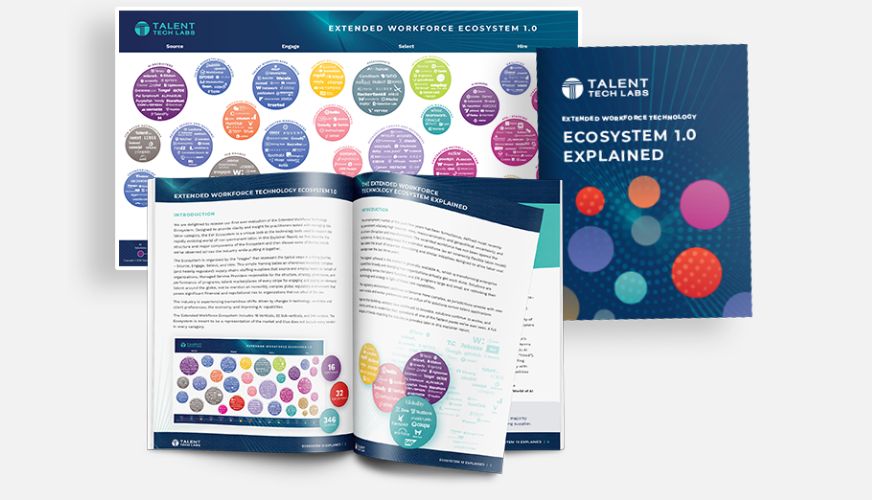
Strategic Tools to Manage the Shifting Contingent Workforce Through the First Extended Workforce Technology EcosystemIn the rapidly growing contingent workforce landscape, the demand for innovative technologies with AI and automation capabilities is a must.
Read the Report Strategic Tools to Manage the Shifting Contingent Workforce Through the First Extended Workforce Technology Ecosystem
-

Case Study
Programmed for SavingsPreserving Headcount While Delivering Cost Avoidance for a Top Tech Client
Read Full Article Programmed for Savings