
Diagnosing Hidden Value
Impact At a Glance
$24.5M
in savings across IT and non-IT work over a two-year transformation roadmap
$3.3M
in savings from the first IT business unit analyzed and renegotiated
$8M+
additional savings identified across the broader IT population
Meeting Missions: Taking the Pulse of a Complex Services Workforce
A large managed care and healthcare solutions company needed clearer visibility into a complex services and resource landscape. As its use of statement of work (SOW) engagements, IT services and non-IT resources grew, leaders wanted to better understand what they were buying, which suppliers were delivering the work and where they could improve value.
The company had worked with Allegis Global Solutions for several years, first through a managed service provider program that later expanded into services procurement, spend insights and resource tracking. That relationship positioned AGS to deliver a more strategic view of the client’s contingent and services workforce.
The opportunity was significant. Within one high-volume IT business unit alone, the client had several hundred million dollars in spend under review. Leaders needed to understand whether work was classified correctly, suppliers were being used effectively, pricing reflected the work delivered and SOW language supported stronger governance.
With year-end SOW renewals approaching, AGS aligned analysis, recommendations and negotiations to a key business milestone. Instead of addressing classification, pricing and supplier utilization separately, the team built a roadmap to improve visibility, reduce risk, capture savings and help procurement focus on the highest-value suppliers and initiatives.
Taking Action: Prescribing a Smarter Path for SOW Management
AGS analyzed the client’s IT SOW spend, using technology-enabled review and quality assurance to examine contracts, milestones, budget changes, deliverables, skill sets and supplier activity. The team assessed the work being performed, milestone structure and whether budget movement reflected scope changes or evolving business needs.
The analysis surfaced multiple sources of value, including misclassified workers, overpaid work and SOWs needing stronger language, rate adjustments or better structure. AGS aligned the project plan to the client’s renewal cycle, so updated terms, new rates and reclassified assignments could take effect with minimal disruption.
AGS also gave the client a clearer view of services spend by categorizing the technology work purchased, intended project outcomes and suppliers supporting key skill sets. This helped leaders see not only how much they were spending, but what business outcomes that spend supported.
AGS developed supplier optimization recommendations, including tiering, rebate opportunities and consolidation guidance that preserved access to critical capabilities. By narrowing supplier usage and clarifying expectations for vendor exceptions, the client could reduce contracting burden, strengthen relationship management and give procurement more capacity for strategic priorities.
Change management was central to execution. AGS helped procurement define escalation paths, supplier communications and business sponsorship for the transition. Senior leader communications reinforced the initiative’s importance, while clear escalation processes helped the client manage supplier pushback, sunset relationships when needed and preserve program value.
Delivering Impact: A Stronger Prognosis for Services Procurement
The first phase delivered immediate momentum, with AGS renegotiating the targeted IT population and transitioning all impacted resources as planned. For the initial business unit, the work is projected to generate $3.3 million in savings by year-end, representing an average savings of approximately 7% across the eligible spend.
The strength of the analysis also helped the client build a business case for broader action. After the initial presentation, the work was shared with senior leaders across procurement, vendor management, HR and technology, including executive stakeholders. Their response was clear: this was the level of visibility they had been seeking for years.
That executive buy-in opened the door to additional phases. AGS analyzed the rest of IT, identifying more than $8 million in additional savings and moving those opportunities into execution. The team also evaluated non-IT work, using insights from the resource tracking program to estimate $12 million in conservative savings opportunity within that population.
For the full roadmap, the program is expected to deliver approximately $24.5 million in savings across IT and non-IT work over two years. The engagement also gave the client a more practical way to manage supplier volume, buying behavior and workforce risk. With clearer insight into spend, supplier performance and project outcomes, procurement was able to spend less time on constant contracting activity and focus more on the strategic work that created long-term value.
By connecting analytics, governance, negotiation strategy and change management, AGS helped the client turn fragmented services data into a more actionable operating model. The result is a scalable approach that supports cost control today while creating a stronger foundation for future workforce and supplier decisions.
Is Your Services Spending Telling the Full Story?
Up Next
-
White Paper
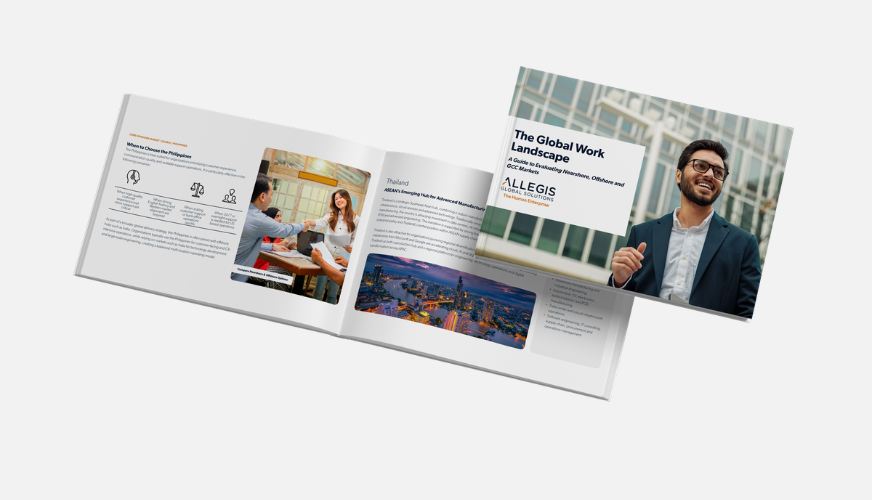
Evaluating Nearshore, Offshore and GCC MarketsThis guide compares nearshore, offshore and GCC markets, examining talent, cost, scalability, capabilities, risk and best-fit global delivery use cases.
Read the Report Evaluating Nearshore, Offshore and GCC Markets
-

Case Study
Programmed for SavingsPreserving Headcount While Delivering Cost Avoidance for a Top Tech Client
Read Full Article Programmed for Savings